

Few things are more annoying than waking up to see the view out of your window obscured by a hazy layer of condensation. Not only are foggy windows unsightly but they could also be a sign of a bigger issue. Let’s break down why your glass is fogging up and what you can do to keep it clear.
Common Reasons Windows Get Foggy
1. Indoor Humidity
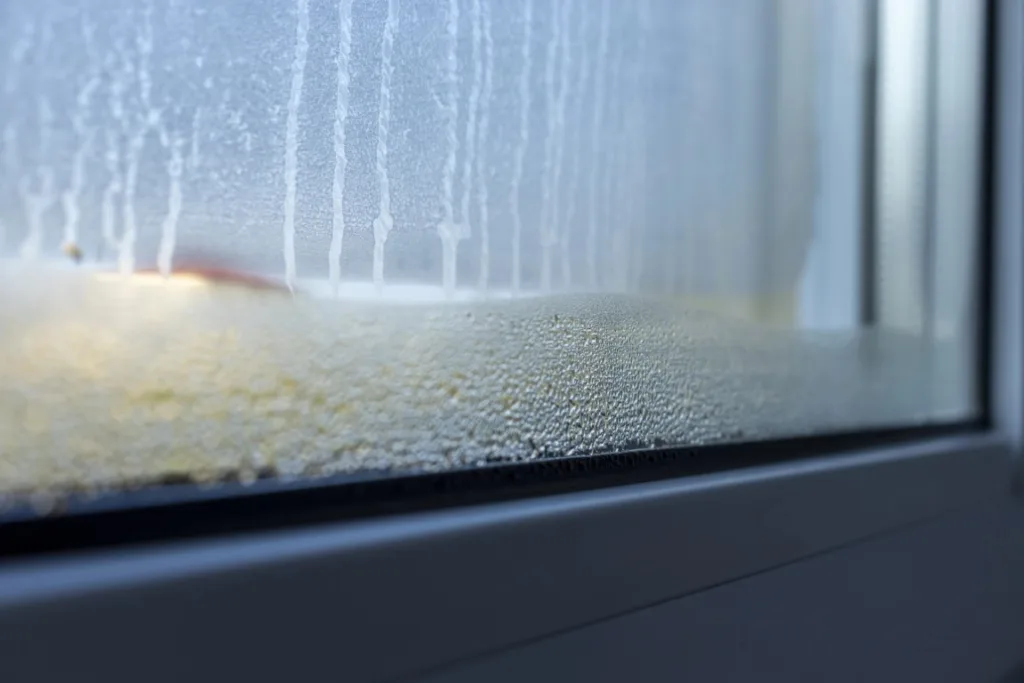
When warm, moist indoor air meets the cool surface of your window, it creates condensation. This is especially common in kitchens and bathrooms, due to high moisture levels produced by cooking and showering.
Additionally, high humidity and moisture and lead to mold and mildew growth around window frames.
2. Temperature Changes
Rapid changes in temperature, such as a chilly night followed by a warm, sunny morning, can lead to foggy windows. During winter, warm air inside can quickly cool down when it meets the frosty, cold glass of your windows.
3. Seal Failure in Double- or Triple-Pane Windows
Modern windows are often insulated with two or three panes of glass separated by a sealed space filled with gas (usually argon). When the seal fails, the gases can escape, making it easier for moisture to get trapped between the panes, creating fog you can’t easily wipe away.
A seal can break from water retention or improper drainage around the window or direct exposure to sunlight, which causes heat to build up and the panes to expand, contract, and eventually weaken.
4. Poor Ventilation
Lack of proper airflow in your home traps humidity, allowing it to build up and increasing the chance of foggy windows. Rooms that are usually sealed off, such as bathrooms or kitchens, are particularly prone to poor ventilation.
How to Fix Foggy Windows
For Interior Condensation:
Improve Air Circulation
- Utilize exhaust fans in kitchens and bathrooms to expel moisture, especially during and after activities like cooking or showering.
- Ensure your attic and basement vents are unobstructed to allow for proper airflow.
- Open windows, particularly after moisture-producing activities, to allow for air exchange. To increase cross-ventiation, open windows or doors on the opposite sides of your home.
- Use ceiling fans to circulate air and promote even temperature distribution.
Control Humidity
- Repair and seal any leaks in your plumbing, roof, or foundation,
- Ensure vents are properly routed to the exterior of your house,
- Avoid drying clothes indoors, as this significantly increases indoor humidity. If you need to use your dryer, ensure the vent isn’t clogged, which can trap excess humidity in your laundry room.
- Use a dehumidifier to remove excess moisture from the air and keep your home at 30 to 50% humidity.
Ensure Proper Insulation
- Insulate walls, floors, and your roof to help maintain consistent temperatures, reducing the likelihood of condensation.
- Make sure your home is properly sealed to prevent drafts and air leaks that can introduce moisture.
- Invest in thermal curtains and window insulation kits to help keep glass warmer.
For Exterior Condensation:
- Exterior condensation is usually harmless; it’s just dew forming on cool glass after a warm, humid night. You don’t need to take any action unless it’s frequent and affecting your view.
- If you want to clear up your view, consider applying a hydrophobic coating, like Rain X, to the exterior of the windows to help water run off and prevent condensation. This coating may need to be reapplied periodically to prevent foggy windows in the future.
For Fog Between Window Panes:
Check Your Warranty
- Many manufacturers cover seal failure for a certain number of years, usually between 10 and 20.
Professional Repair or Replacement
- A window repair company can install a replacement if necessary. If the frame is still in good condition, you may be able to just replace the insulated glass unit instead of the entire window.
Preventing Future Foggy Windows
- Maintain proper humidity levels year-round.
- Regularly inspect windows for cracks or failing seals.
- Ensure vents, fans, and HVAC systems are working efficiently.
- Ensure attic and crawlspace ventilation is adequate to prevent moisture buildup.
- For a short-term solution, wipe away moisture on foggy windows to remove condensation and prevent water damage.

Keep Your View Clear No Matter the Season
Foggy windows might seem like a small inconvenience, but they can signal underlying issues with humidity, ventilation, or window seals. By identifying the cause, whether it’s a simple condensation or a failed seal, and doing the right maintenance or controlling the indoor climate, you can fix the problem and prevent it from coming back, keeping your windows clear, bright, and functional for years to come.